
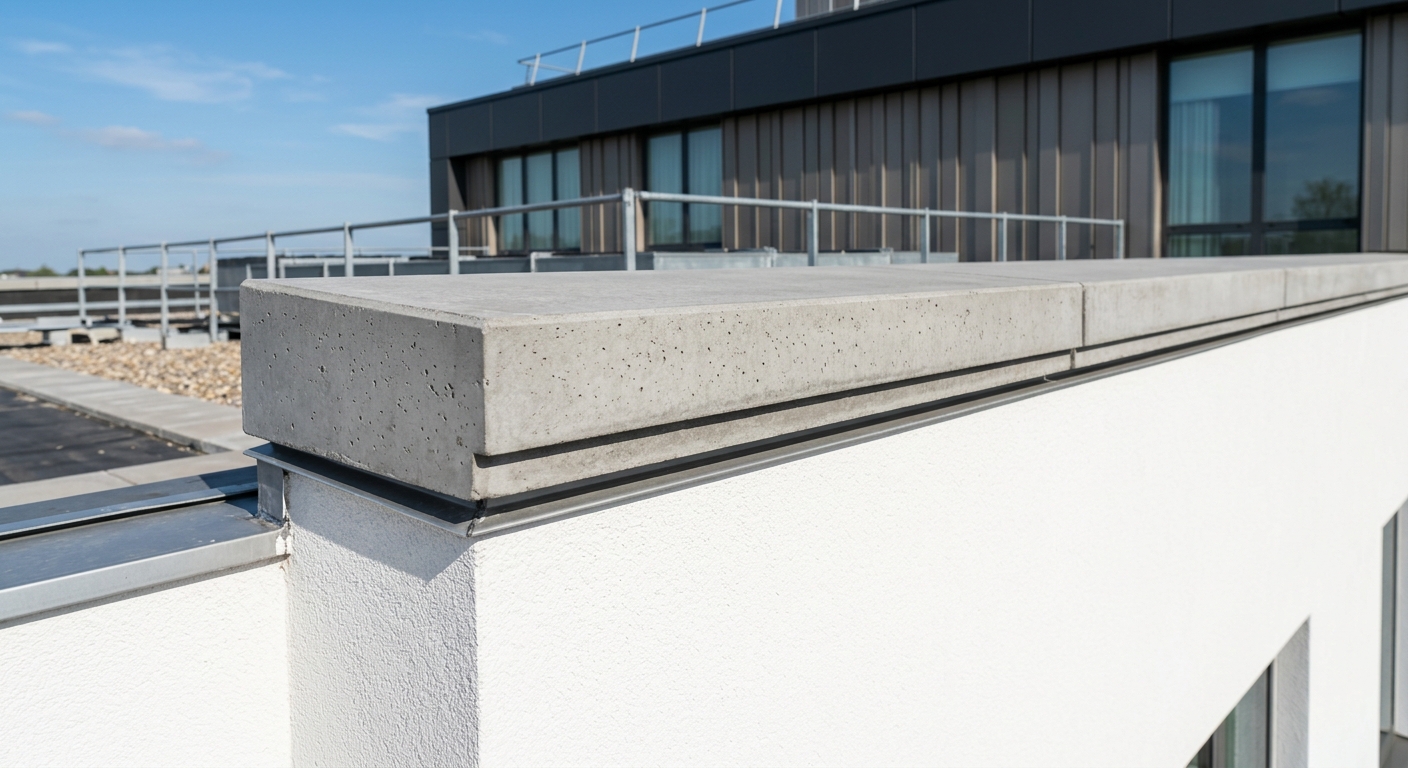
Preventing Facade Pollution with Drip Edge Precast Coping and Waterproofing
One of the primary factors ruining the aesthetic appeal of buildings is the dirty water streaks left by rainwater on facade surfaces. When parapet walls lack a proper protection system, accumulated dust and grime wash down the walls, leading to permanent staining. The most effective architectural solution to this problem is the drip edge precast coping detail.
What is Drip Edge Coping and Why is it Essential?
Coping is a construction element used to cap the tops of exposed walls, particularly parapets, to drain water away. Precast coping, manufactured with high-strength concrete, offers both aesthetic appeal and long-lasting durability. The drip edge detail refers to a specialized groove on the underside of the coping that ensures water drips directly to the ground without contacting the facade surface.
Technical Structure of the Drip Edge Detail
The drip groove breaks the surface tension of the water, preventing it from tracking back onto the wall surface. In a standard application, the coping should overhang the wall by approximately 3-5 cm on both sides and include a drip groove at least 1 cm deep. This simple yet critical detail is key to preventing facade pollution.
Waterproofing Solutions for Precast Coping
Simply installing coping is not enough to protect a building from moisture. The waterproofing layer beneath the coping is vital for the health of the reinforced concrete structure. Using elastic joint sealants at the connection points of precast elements and applying bitumen or liquid-applied waterproofing membranes under the coping completely stops water infiltration.
Application Tips for Clean Facades
- Slope Factor: The top surface of the coping must be designed with at least a 2% slope inward or outward to prevent water pooling.
- Material Quality: Precast concrete should have low water absorption and be resistant to freeze-thaw cycles in winter conditions.
- Correct Installation: Joints between coping stones must be isolated with waterproof sealants.
In conclusion, utilizing drip edge precast coping details and professional waterproofing solutions is a technical necessity to prevent facade pollution. Proper detailing preserves your building's value and minimizes long-term maintenance costs.