
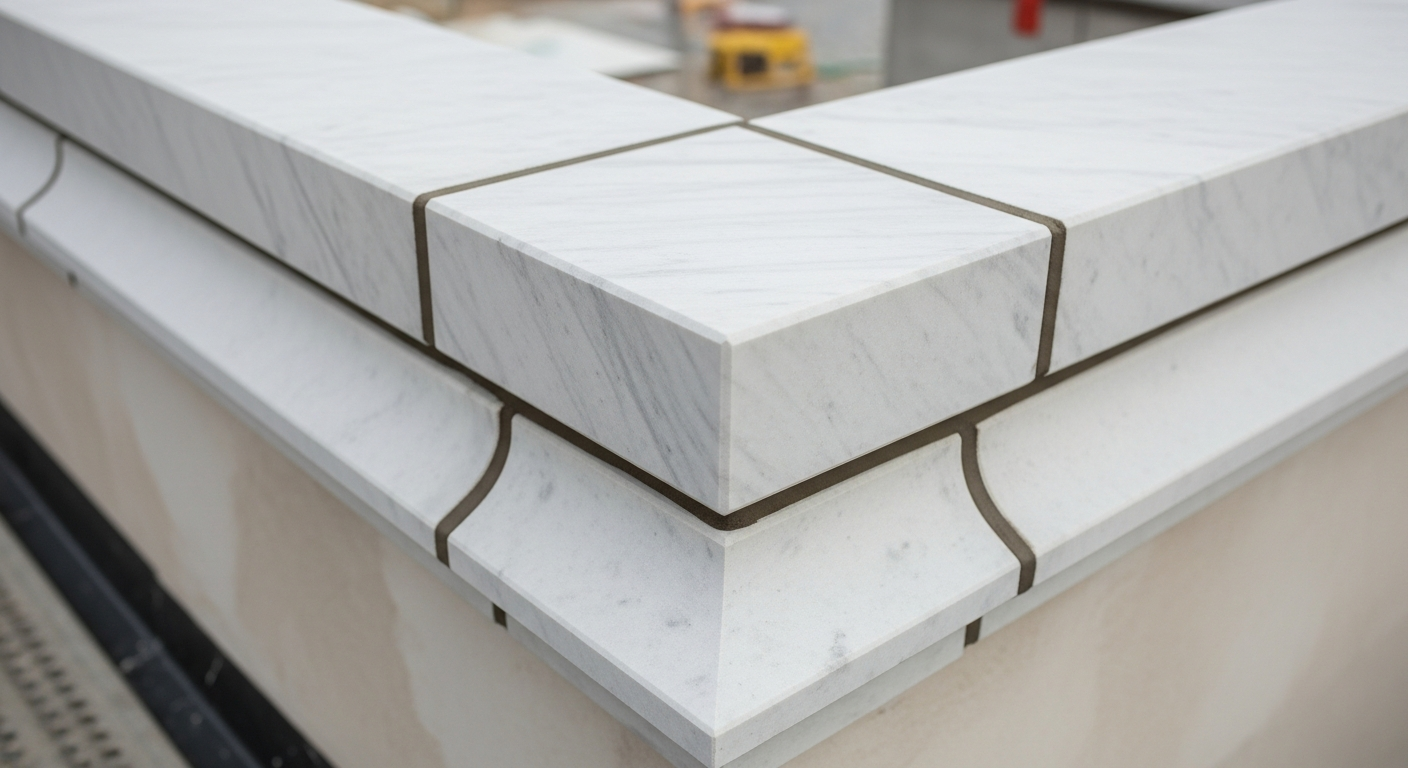
Parapets and windowsills, which play an aesthetic and protective role on the exterior of buildings, ensure that water is drained without damaging the structural elements. However, errors made especially at corner junction points can lead to moisture, mold, and structural corrosion in a short time. In this guide, we discuss the technical details and critical solution methods for ensuring water tightness in parapet and windowsill installation.
Why is Waterproofing Critical at Corner Transitions?
While water drainage is relatively easy in straight lines, corner points where two different surfaces meet are the weakest links for water leakage. When waterproofing is not fully ensured at the joints of parapets and windowsills, water penetrates the reinforced concrete structure, causing the reinforcement to rust and the facade cladding to shed. Search Console data proves that users are looking for solutions specifically for the problems experienced in these technical details.
Common Installation Errors
Small negligences made during application lead to high-cost repairs in the long run. Here are the most common errors:
1. Incorrect Slope and Bevel Errors
The parapet must have a slope of at least 2-3% towards the outside. Failure to maintain this slope in both directions at corner joints causes water to pool at the junction point. In addition, the disruption of the continuity of the drip grooves (water drainage channels) at corner turns causes water to trickle down the wall.
2. Wrong Choice of Sealant and Filling Material
Ordinary silicones cannot withstand the UV rays and temperature changes that the exterior is exposed to. The use of filling materials that quickly lose their elasticity at corner joints opens the door to cracks and water leaks.
Professional Solutions and Application Steps
The following technical steps are recommended to be meticulously applied to make the sealing permanent:
Use of Corner Junction Elements
If possible, instead of cutting on-site, factory-produced 90-degree ready-made corner pieces should be preferred. If the cutting is to be done on-site, the joints after the 45-degree 'miter cut' should be supported with epoxy-based adhesives and polyurethane sealants.
Drip Edge Continuity and Waterproofing Tapes
Before installation, waterproofing membranes or sealing tapes should be applied under the parapet. This creates a secondary protection layer and prevents water that may leak from the parapet joint from entering the building. It should be ensured that the drip edge channels at the corner joint are compatible with each other and open.
Conclusion
Parapet and windowsill installation is not just a visual finish, but an insulation strategy that extends the life of the building. Attention to corner details is the key to protecting your facade health. With the right material selection and technical application steps, you can completely eliminate the risk of water leakage. Always prefer high-quality sealing products in accordance with technical specifications in your professional projects.